What Is Close Board Fencing?
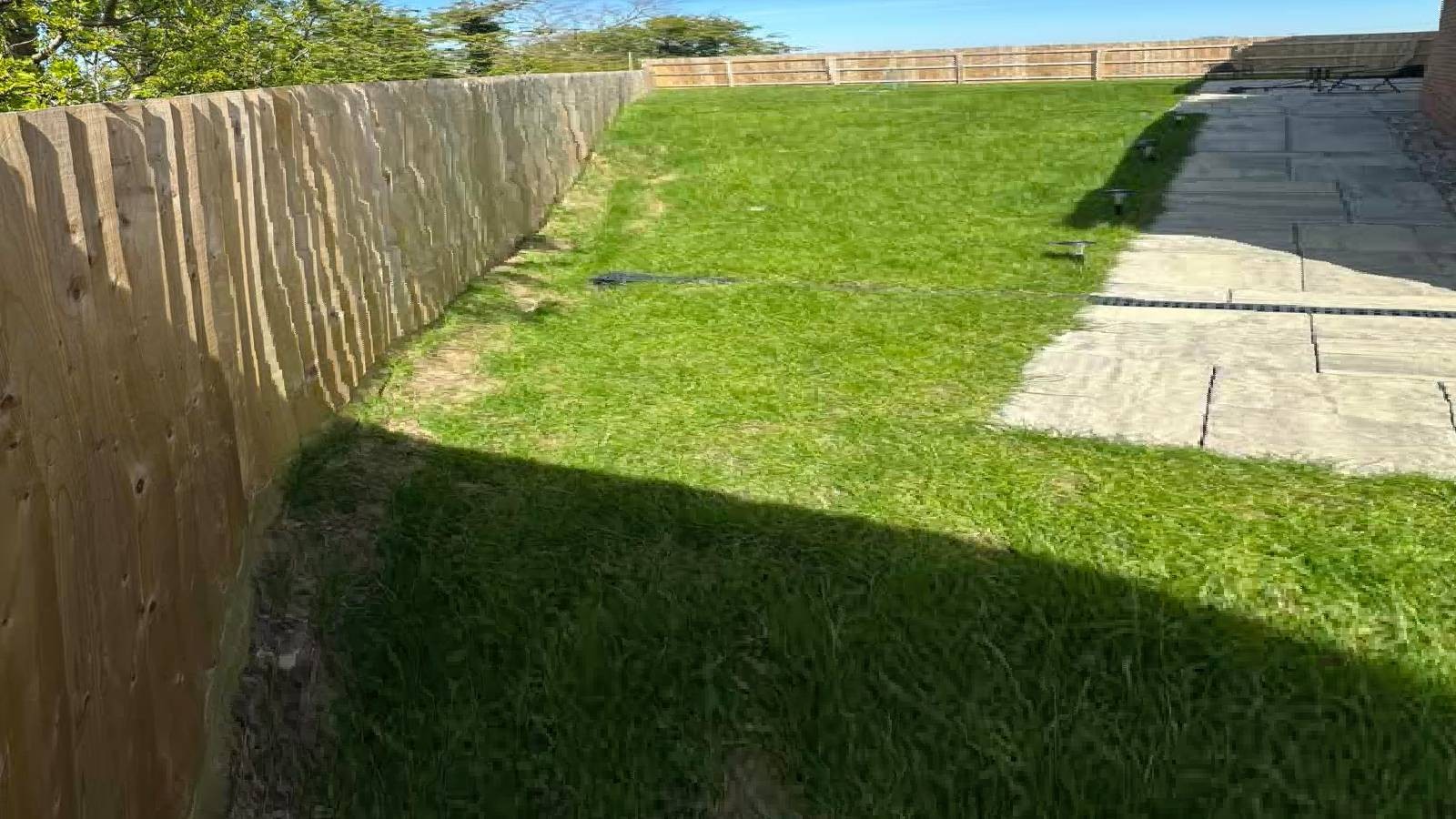
Close board fencing — also known as featheredge fencing — is the most widely used timber garden fence in the UK, and for good reason. Unlike panel fencing, which arrives pre-made and simply slots between posts, close board fencing is constructed entirely on-site, board by board. This means it can follow the natural contour of your garden, including slopes and uneven ground, without leaving gaps at the bottom.
Each fence is built from vertical featheredge boards — tapered timber planks that overlap one another slightly — fixed horizontally to arris rails (triangular cross-section timber rails) and supported by either concrete or timber posts set into the ground. A capping rail along the top and gravel boards along the base complete the structure, protecting the most vulnerable parts from ground moisture and prolonging the life of the fence.
The Components of a Close Board Fence
A well-built close board fence is a system — every component plays a role in its strength and longevity. Here's what goes into every installation we carry out in Derby:
Featheredge Boards
Vertical tapered timber boards that overlap each other by around 25mm. Typically 100mm or 125mm wide. Pressure-treated to resist rot and decay.
Arris Rails
Horizontal triangular-section timber rails fixed to the posts, to which the featheredge boards are nailed. Usually 2 or 3 rails depending on fence height.
Fence Posts
Either concrete or pressure-treated timber posts, set into the ground with postcrete. Concrete posts are more durable; timber posts are easier to replace if needed.
Gravel Boards
Horizontal boards running along the base of the fence, protecting the featheredge boards from ground moisture. Available in timber or concrete.
Capping Rail
A horizontal rail fitted along the top of the fence to protect the end grain of the featheredge boards from rain penetration and weathering.
Post Caps
Fitted to the top of each post to prevent water sitting on the end grain and causing premature rot. A small detail that makes a significant difference to longevity.
Close Board Fencing on Slopes — Derby's Varied Terrain
Derby's residential areas span a wide range of ground conditions. Gardens in areas like Allestree, Darley Abbey, and Chaddesden frequently have significant slopes, while properties near the River Derwent corridor can have challenging ground conditions. Close board fencing handles all of this with ease.
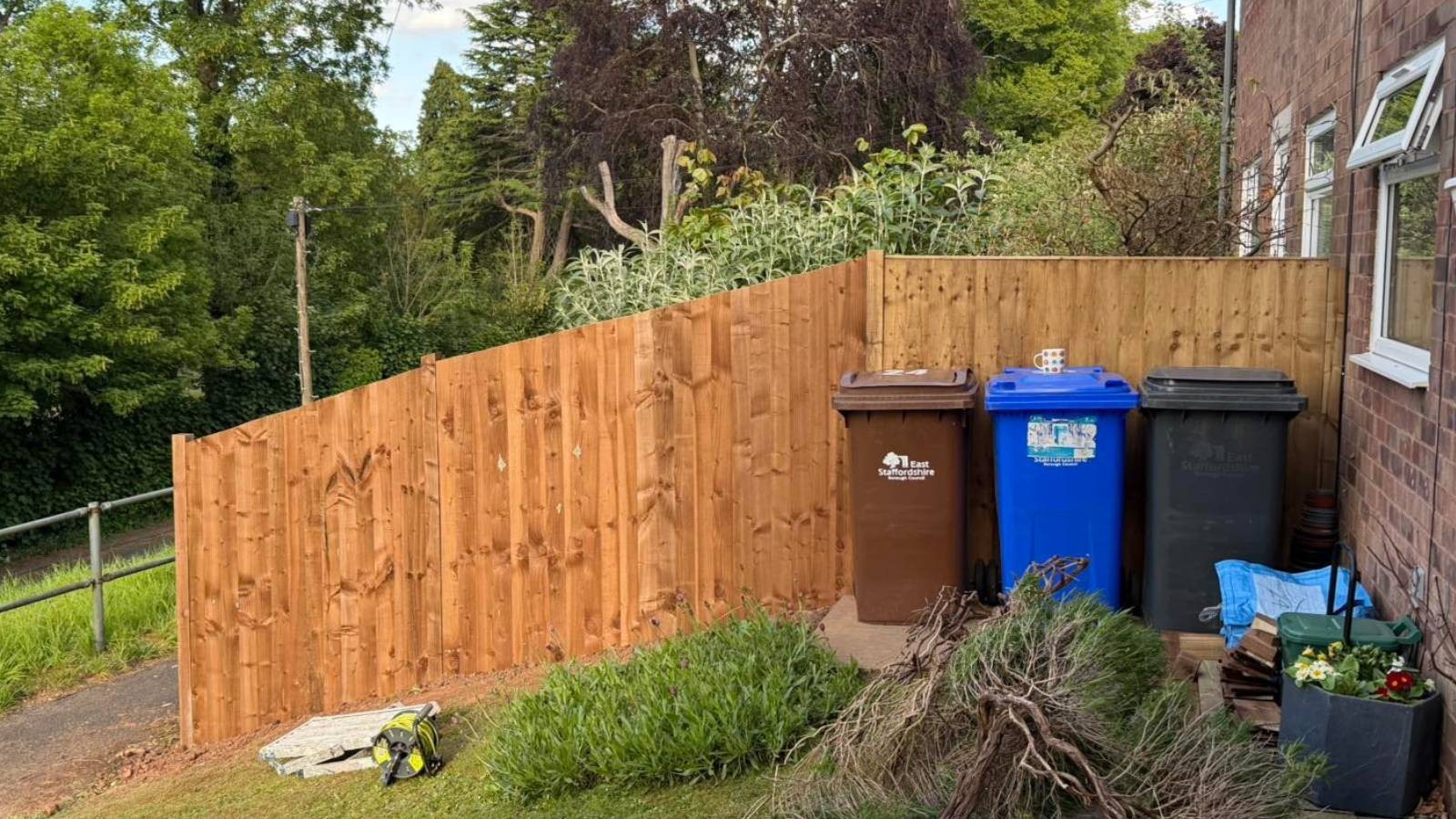
Because each board is individually fixed to the arris rails on-site, the fence can be built to follow the slope of the ground continuously — known as a "raked" installation — or stepped in sections if preferred. Either way, you get a consistent fence height from top to base, with no unsightly gaps underneath.
Panel fencing simply can't do this cleanly. If you've been told your sloped garden is too awkward for a nice fence, close board fencing is almost certainly the solution.
Heights, Specifications & Options
We install close board fencing to your exact requirements. The most common specifications we install across Derby are:
- 1.2m (4ft) — low garden dividers, boundary markers, and areas where a lower fence is preferred or required
- 1.5m (5ft) — a popular choice for side boundaries and gardens where a medium height provides privacy without blocking light
- 1.8m (6ft) — the standard height for full rear garden privacy, the most commonly requested specification
- 2.0m (6.5ft) — maximum height without planning permission in most residential situations
We also offer a choice of post material (concrete or timber), gravel board material (concrete or timber), and can discuss pressure-treatment options, paint or stain colours, and matching gate styles.
How Long Does Close Board Fencing Last?
A properly installed close board fence using pressure-treated (tanalised) timber, with concrete gravel boards and posts set in concrete, should last 20–25 years or more with minimal maintenance. The key factors that affect longevity are:
- Quality of timber and whether it is pressure-treated
- Post material — concrete posts outlast timber posts significantly
- Ground conditions and drainage around the base
- Whether gravel boards are used to keep timber off the soil
- Occasional painting or staining of the boards (every 3–5 years extends life considerably)
We only use pressure-treated timber on every installation — it's a non-negotiable standard for us. We've seen far too many fences built with untreated timber that begin to decay within a few years.
Close Board Fencing Costs in Derby
The cost of close board fencing in Derby depends on the length of the run, the height, post material choice, ground conditions, and whether old fencing needs to be removed first. As a general guide:
- Close board fencing typically ranges from £90–£160 per metre fully installed, including posts, arris rails, gravel boards, and capping rail
- Concrete posts cost a little more than timber posts but add significant longevity
- Removal and disposal of old fencing is usually charged as an additional item
- Difficult ground conditions (rocky soil, tree roots) may affect pricing
We provide free, fully itemised written quotes before any work begins. There are no hidden extras — what we quote is what you pay.
Serving All Areas of Derby
We install close board fencing across every part of Derby and the surrounding areas. Whether your property is in Allestree, Mickleover, Chellaston, Chaddesden, Littleover, Normanton, Alvaston, Spondon, or any other part of the city, we can reach you quickly from our base on Babington Lane, Derby DE1.
View our full coverage area or call us to confirm we cover your postcode.